Every word Claude writes now carries something you can't see: a signal woven into the text itself, invisible to a reader, but readable, at least in theory, by a detector nobody outside Anthropic can actually use yet.
That gap, between "the mark is already everywhere" and "the way to check for it doesn't exist publicly," is the whole story here.
What Anthropic Actually Confirmed
On August 11, 2026, Anthropic confirmed in an updated Claude Help Center article that new Claude models embed invisible, machine-readable watermarks in the text they generate, alongside signed provenance metadata attached to supported files.
Claude models launched on or after August 2, 2026 support the marking system at launch
It covers Claude Platform (API), claude.ai, Claude Code, Claude Cowork, and Claude Tag, including access through AWS, Google Cloud, and Microsoft Foundry
Supported generated files, including common image formats, get digitally signed provenance metadata rather than a text-style watermark
Older Claude models don't yet have this capability; Anthropic says it's working to extend marking support to them during the EU AI Act's transition period
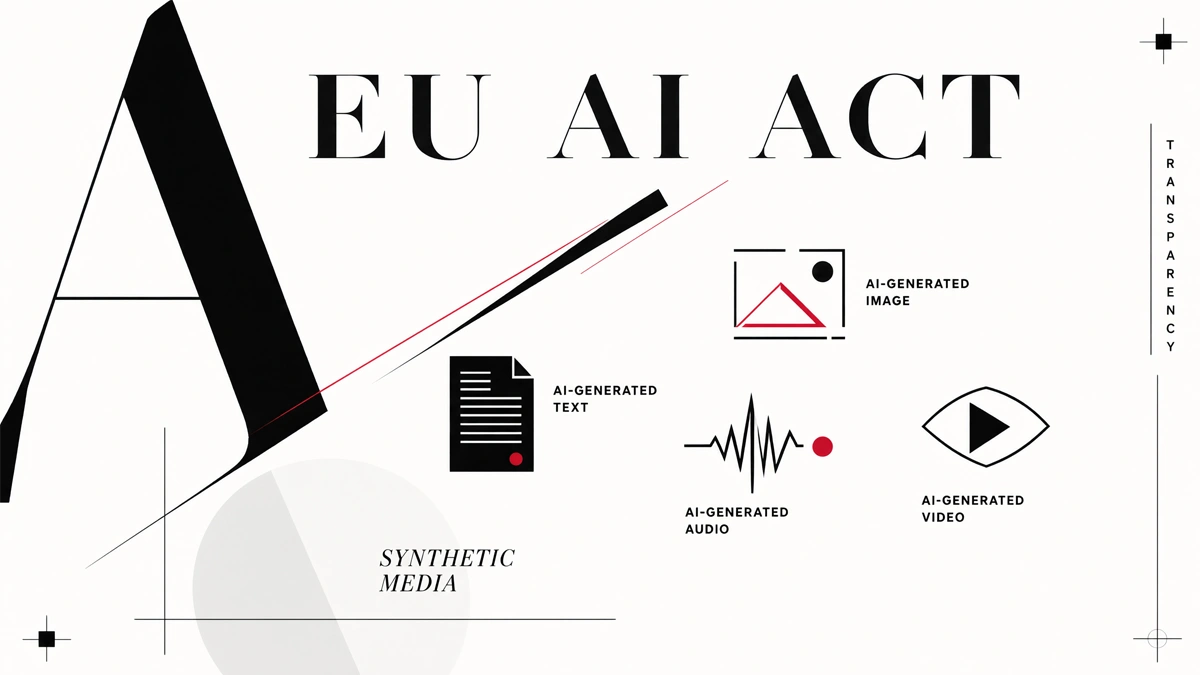
The move fulfills a commitment Anthropic made by signing the European Union's Article 50(2) Code of Practice on Transparency of AI-Generated Content, whose obligations took effect August 2, 2026. Other signatories to the same code include Black Forest Labs, Google, Meta, Microsoft, OpenAI, and Synthesia.
What the Mark Survives, and What Breaks It
Anthropic's own documentation is fairly candid about the limits here, which is worth taking at face value rather than assuming the system is either bulletproof or useless.
The mark "will travel with the text when it's copied and pasted elsewhere, and may persist through some editing," according to Anthropic's Help Center
Heavy paraphrasing or substantial rewriting breaks the signal; Anthropic states this directly
Translation or combining Claude's output with other text can also weaken or eliminate the watermark
Short passages may not contain enough material for reliable detection in the first place
Just as important: a public detection tool doesn't exist yet. Anthropic says it's developing tools that will let users and third parties check for the mark, but as of this announcement, nobody outside the company can actually verify whether a given piece of text carries it.
| What the Watermark Does | What It Doesn't Do |
|---|---|
| Embeds a machine-readable signal in newly generated Claude text | Provide a public way to check for that signal, yet |
| Survives copy-paste and some light editing | Survive heavy paraphrasing, rewriting, or translation |
| Covers all newly launched Claude models across major products | Cover older Claude models yet |
| Signals that Claude processed a piece of text | Prove who, if anyone, wrote the underlying ideas |
Why "Processed By" Isn't the Same as "Written By"
This distinction matters enough that Anthropic built it directly into its own messaging: the watermark is a provenance signal, not a definitive authorship verdict, in either direction.
A human might write a full draft themselves, then ask Claude to translate, summarize, or lightly edit it, and the resulting text could still carry a Claude mark despite the substance being entirely human-originated. The reverse is just as true: unmarked text doesn't prove a human wrote it. Older Claude models, heavy post-editing, short passages, and ordinary file-format changes can all strip a provenance signal from genuinely AI-generated content.
A separate outlet noted a useful point of contrast: as of late July, OpenAI's own EU compliance statement had acknowledged that text watermarking remained harder for it to deploy at scale, making Anthropic one of the first major labs to actually ship this specific capability rather than just commit to it on paper.
The Reaction Hasn't Been Entirely Warm
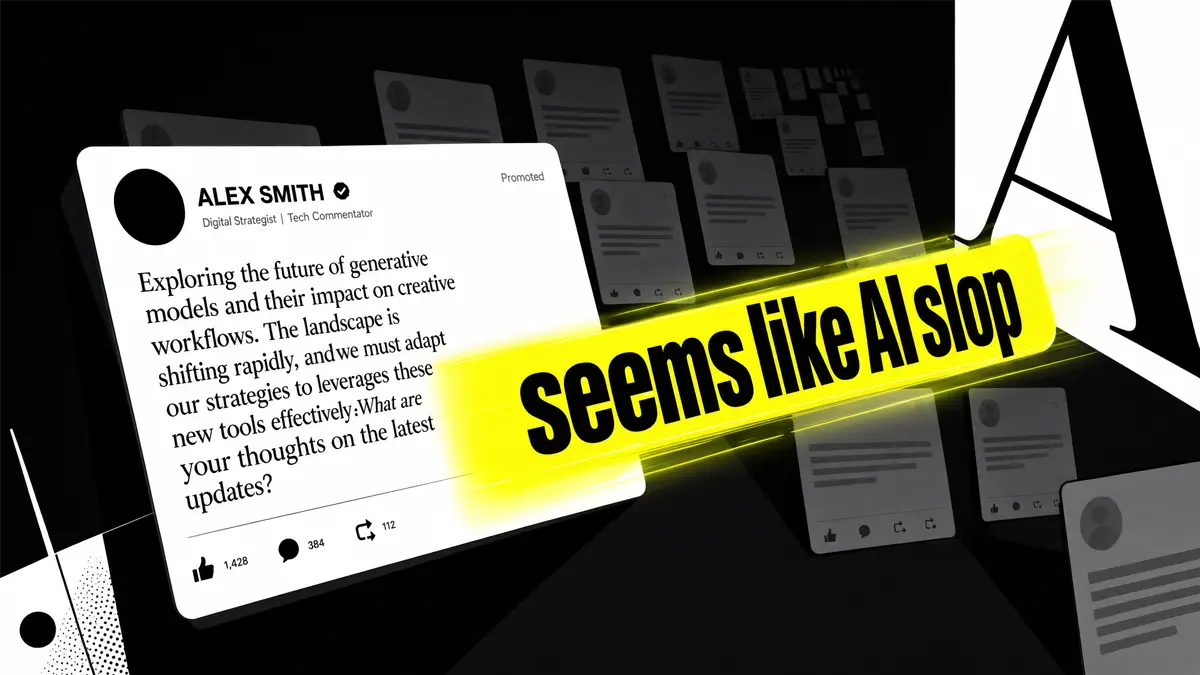
Backlash to the announcement intensified quickly on social platforms, with some users objecting to the idea of AI use being detectable in their own work at all. Anthropic's framing, that the mark isn't Claude "claiming credit" but rather "acknowledging the content is AI created," didn't fully settle the argument.
One commenter pushed back directly on that framing: "Claude created the work and ALL you did was give instructions. If your supervisor came to you and gave you instructions on a project and once you completed it, he/she then proceeded to take 100% credit for it, you might be understandably upset." The disagreement, in other words, isn't really about the technical mechanics of the watermark. It's about a much older, unresolved question: how much authorship credit belongs to the person steering an AI tool versus the tool doing the writing, a question the watermark surfaces but doesn't answer.
Claude's Watermark System: FAQ
On August 11, 2026, Anthropic confirmed that Claude models launched on or after August 2, 2026 embed an invisible, machine-readable watermark directly into generated text, and attach signed provenance metadata to supported generated files, including common image formats. The system covers the Claude Platform API, claude.ai, Claude Code, Claude Cowork, Claude Tag, and Claude accessed through AWS, Google Cloud, and Microsoft Foundry.
Anthropic says the move fulfills its commitments under Article 50(2) of the EU AI Act's Code of Practice on Transparency of AI-Generated Content, a voluntary framework whose obligations took effect August 2, 2026. Other companies, including Black Forest Labs, Google, Meta, Microsoft, OpenAI, and Synthesia, have also committed to the same code.
According to Anthropic's own Help Center, the mark will travel with text when it's copied and pasted elsewhere, and may persist through some editing. However, Anthropic acknowledges that heavy paraphrasing, substantial rewriting, translation, or combining Claude's output with other text can weaken or eliminate the watermark signal entirely.
Not yet, as of this writing. Anthropic says it is developing tools that will let users and third parties detect Claude's embedded watermarks and provenance metadata, but that detection tool had not shipped publicly at the time of the announcement.
No, in either direction. Anthropic explicitly cautions against treating either signal as definitive proof of authorship. Claude can process material a person originally wrote, such as translating, summarizing, or editing existing work, and the resulting text could still carry a Claude mark. Conversely, unmarked content doesn't necessarily mean a human wrote it, since older Claude models, heavy editing, or short passages can all leave text without a detectable watermark.
Reaction has been mixed and, on some platforms, heated. Some users argued the watermark simply acknowledges AI involvement rather than claiming credit away from the person directing the work, while others argued the system doesn't adequately credit the effort and expertise involved in prompting, reviewing, and shaping AI-generated output.

Jans Bock-Schroeder
Publisher & Founder of AI Angst
Coming from the world of art, photography, and the luxury market, Jans launched AI Angst in 2025 to explore the cultural, ethical, and psychological impacts of artificial intelligence. His work bridges creative vision with critical technology analysis, offering clarity in an era of rapid technological change.
Sources and Citations
This article is based on the following sources, published August 11-12, 2026:
-
Claude Help Center: "How Claude marks AI-generated content" (Anthropic, updated August 11, 2026)
Primary official source for the watermark and provenance metadata system, its coverage, and its limits.
https://support.claude.com/en/articles/16266773-how-claude-marks-ai-generated-content -
TechCrunch: "Anthropic says it will watermark text generated by its AI models" (August 11, 2026)
Source for the industry-wide labeling-tool trend and other companies' Code of Practice commitments.
https://techcrunch.com/2026/08/11/anthropic-says-it-will-watermark-text-generated-by-its-ai-models/ -
Forbes: "Claude Will Put Invisible Watermarks On AI Text And Images—And The Internet Isn't Happy" (August 11, 2026)
Source for user reaction and the quoted commenter pushback.
https://www.forbes.com/sites/maryroeloffs/2026/08/11/claude-will-put-invisible-watermarks-on-ai-text-and-images-and-the-internet-isnt-happy/ -
Business Standard: "Claude AI Watermark: How Anthropic Marks AI-Generated Text" (August 11, 2026)
Source for the EU AI Act Article 50(2) compliance detail and transition-period explanation.
https://www.business-standard.com/technology/tech-news/claude-invisible-watermark-ai-generated-text-how-it-works-126081100381_1.html -
Tech Times: "Claude Now Watermarks Text Everywhere; Mark Proves Processing, Not Authorship" (August 11, 2026)
Source for the comparison to OpenAI's own EU compliance statement and the detection-tool gap.
https://www.techtimes.com/articles/323873/20260811/claude-now-watermarks-text-everywhere-mark-proves-processing-not-authorship.htm
Published: August 13, 2026. Sources verified at time of publication. All external links open in a new tab. This article covers a product change made by Anthropic, the company behind Claude; details are drawn from Anthropic's own published documentation alongside independent reporting.