Apple says it built a tool that can look at any song delivered to Apple Music and tell you exactly which AI made it, if any. Apple also just announced a new label meant to tell listeners exactly that. It's choosing not to use the tool to check the label.
That's not a contradiction Apple is hiding. It's one the company has actually explained, out loud, on the record.
What's Actually Changing
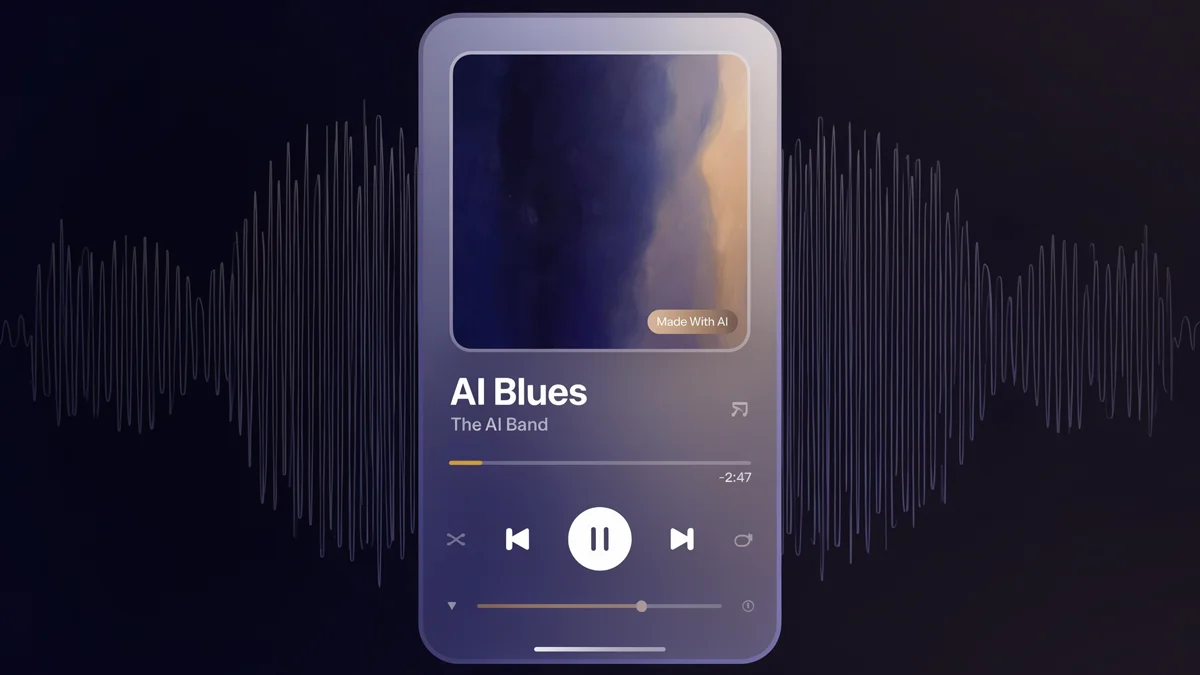
In a note to music industry partners sent August 20, 2026, and obtained by Billboard and Variety, Apple Music confirmed it will begin showing visible "Made With AI" labels to listeners later this year.
The label applies to content record labels and distributors tag as "materially generated using AI"
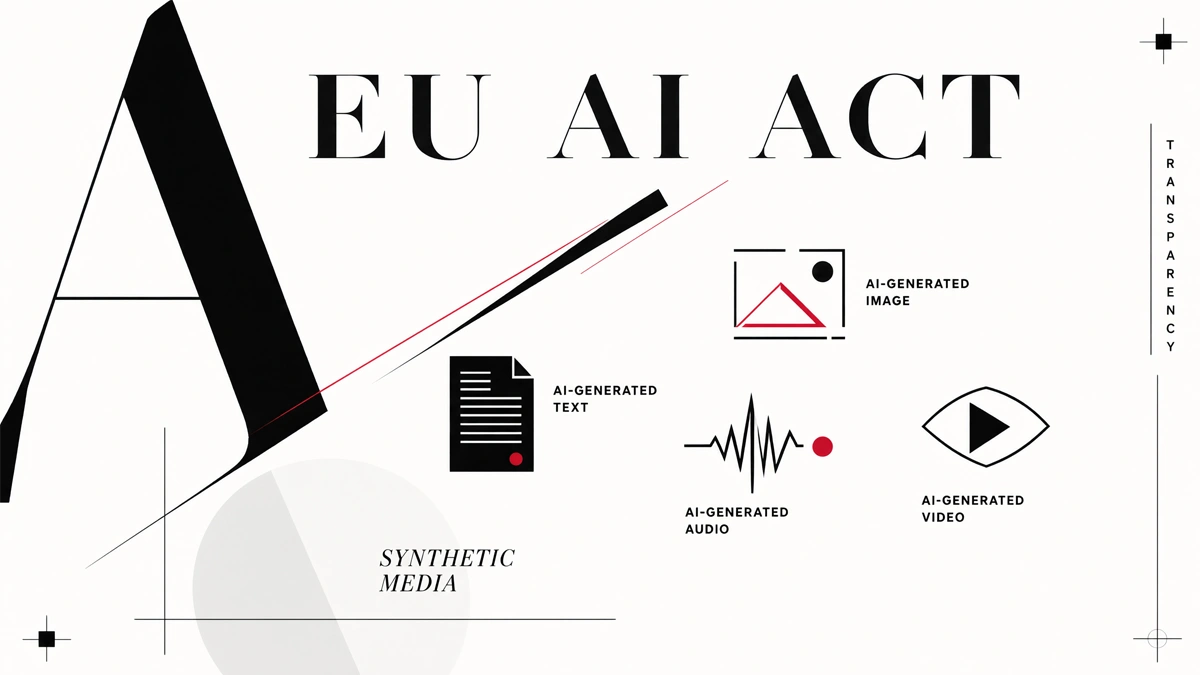
It builds on Transparency Tags, a metadata system Apple Music introduced in March 2026, covering four categories: Artwork, Track, Composition, and Music Video
Those tags previously existed only in Apple's backend systems; this update makes the same data visible to listeners for the first time
Apple Music runs on Android as well as iOS, so the labels will appear for Google Play Store users too
"As we implement Made With AI Labels, content providers will be important partners," Apple Music wrote in its note.
The Part That's Doing the Real Work Here
Here's the detail that actually determines how much this label is worth: who decides what gets tagged.
It's not Apple. It's the record labels and distributors submitting the content, self-reporting through Apple's existing metadata system, the same way they'd log a genre or a songwriting credit. Apple Music VP Oliver Schusser was direct about this in an April 2026 appearance on Billboard's On the Record podcast, and about the fact that Apple has its own separate capability: "We have developed, and we've never talked about this, but we've developed technology in-house that would allow us to exactly see what music people are delivering us, what AI [model] it is and all that."
Asked why the label relies on self-disclosure instead of that in-house detector, Schusser's answer reframed the problem rather than resolving it: "Well, first of all, you should know that every label in the world is delivering AI, [even if] they might not know about it. They themselves also need to develop tools to understand [the scope of AI use]." Read plainly, that's an argument for why detection is genuinely needed, offered as the reason Apple isn't currently using its own.
| What Exists | What's Actually Used for the Label |
|---|---|
| Apple's in-house AI-detection technology, confirmed by Schusser | Not applied to verify "Made With AI" labels |
| Transparency Tags across 4 content categories | Self-reported by labels and distributors at upload |
| Apple's claim that 1/3+ of uploads are "100% AI" | Based on Apple's own internal detection, not the public-facing label system |
| 2 billion "fraudulent" streams demonetized in 2025 | A separate anti-fraud enforcement effort, not the new visible label |
As one outlet covering the story put it: "The party with the commercial incentive to under-tag is the party doing the tagging, and Apple has said it holds a tool capable of checking the answer. A listener looking at an unlabelled track will not be able to tell whether it is human-made or simply undeclared."
How This Fits the Rest of the Industry
Apple isn't moving in isolation, and it isn't moving first, either. Spotify labels apparently AI-generated artist profiles as "AI Personas" and said it pulled more than 75 million AI-generated "spam" tracks over the prior year. Tidal labels AI music and blocks those tracks from earning royalties entirely. Deezer has reported that up to 85% of the AI-generated music on its platform, about 28% of everything uploaded, was flagged as fraudulent and demonetized. Bandcamp banned AI-generated music outright in January 2026.
A coalition including the RIAA, IFPI, the Grammys, and SAG-AFTRA has separately proposed a more granular two-tier standard: an "AI-generated" tag for tracks where AI created key vocals or instrumentals, or the whole song from a prompt, versus an "AI-assisted" tag for tracks where humans still performed lead vocals and instrumentals with AI playing a smaller role. That proposal remains just that, a proposal, rather than something platforms have uniformly adopted.
Apple Music's "Made With AI" Label: FAQ
It's a visible label Apple Music will apply, later in 2026, to songs that record labels and distributors have tagged as being "materially generated using AI." Apple confirmed the plan in an August 20, 2026 note to music industry partners, obtained by Billboard and Variety.
Apple Music introduced Transparency Tags in March 2026, an optional metadata system letting content providers disclose AI use across four categories: Artwork, Track, Composition, and Music Video. Those tags existed in Apple's backend systems but weren't shown to listeners. The "Made With AI" label makes that same underlying data visible on the listener-facing side of the app for the first time.
Record labels and distributors do, through self-reporting when they submit content to Apple Music. Apple has not said it will independently verify these tags using its own detection tools before applying the visible label.
According to Apple Music VP Oliver Schusser, yes. Speaking on Billboard's On the Record podcast in April 2026, Schusser said Apple had "developed technology in-house that would allow us to exactly see what music people are delivering us, what AI [model] it is and all that," but he said responsibility for accurate tagging still falls on content providers, since even labels themselves may not always know the full extent of AI's role in tracks passed along to them.
Schusser told Billboard earlier in 2026 that "more than a third" of tracks uploaded to Apple Music were "100% AI." Separately, Apple has said it demonetized roughly 2 billion "fraudulent" music streams in 2025.
Spotify labels the profiles of apparently AI-generated artists as "AI Personas" and said it removed more than 75 million AI-generated "spam" tracks over the prior year. Tidal labels AI music and bars those tracks from earning royalties. Deezer has said up to 85% of AI-generated music on its platform, roughly 28% of all uploads, was flagged as fraudulent and demonetized. Bandcamp banned AI-generated music outright in January 2026. A coalition including the RIAA, IFPI, the Grammys, and SAG-AFTRA has separately proposed a two-tier "AI-generated" versus "AI-assisted" labeling standard for the industry.

Jans Bock-Schroeder
Publisher & Founder of AI Angst
Coming from the world of art, photography, and the luxury market, Jans launched AI Angst in 2025 to explore the cultural, ethical, and psychological impacts of artificial intelligence. His work bridges creative vision with critical technology analysis, offering clarity in an era of rapid technological change.
Sources and Citations
This article is based on the following sources, published August 20, 2026:
-
Variety: "Apple Music to Label AI-Made Tracks Later This Year" (August 20, 2026)
Primary source for the partner note details and the RIAA/IFPI/Grammys/SAG-AFTRA coalition proposal.
https://variety.com/2026/music/news/apple-music-to-label-ai-made-tracks-1236839371/ -
AndroidPure: "Apple Music Will Label AI Songs, but Record Companies Decide Which Ones" (August 20, 2026)
Source for Oliver Schusser's direct quotes and the self-reporting versus in-house-detection analysis.
https://www.androidpure.com/apple-music-made-with-ai-labels/ -
MacRumors: "Apple Music to Label AI-Generated Songs" (August 20, 2026)
Source confirming the March 2026 Transparency Tags system and its four content categories.
https://www.macrumors.com/2026/08/20/apple-music-to-label-ai-generated-songs/ -
DJ Mag: "Apple Music to give AI-generated music option to be labelled with new Transparency Tags" (March 10, 2026)
Source for the original March 2026 Transparency Tags launch and industry-wide fraud/demonetization figures.
https://djmag.com/news/apple-music-give-ai-generated-music-option-be-labelled-new-transparency-tags -
Tech My Money: "Apple Music Will Label AI-Made Tracks Later This Year" (August 20, 2026)
Source confirming the exact wording of Apple's partner note and its Android/Play Store applicability.
https://techmymoney.com/2026/08/20/apple-music-will-label-ai-made-tracks-later-this-year/
Published: August 21, 2026. Sources verified at time of publication. All external links open in a new tab. A specific launch date for the visible labels had not been announced as of this writing.