Nvidia's business model has always had a nice property: it doesn't really matter who wins the AI race, because almost everyone running is buying Nvidia's chips to compete.
That's what makes this week's report a little surprising. Nvidia isn't just selling the shovels anymore. It's quietly digging its own hole, and this one goes to a trillion.
What's Actually Being Built
On August 11, 2026, The Information reported, citing people working on the project, that Nvidia is developing a new AI model family called Nemotron 4, aimed squarely at challenging the world's top open-weight models. Reuters independently confirmed the reporting the same day.
The largest Nemotron 4 model will have at least 1 trillion parameters, according to multiple employees working on the project
That's roughly double the size of Nvidia's current largest model
No release date has been set; training was reportedly still ongoing as of the report
Employees told The Information the model could be ready as early as late fall 2026
The project has grown enormous internally: the research paper for Nvidia's last major model listed 570 authors, and employees expect Nemotron 4's to be larger still
"Nvidia is investing in Nemotron because we believe every company and every country needs accessible frontier open models to strengthen safety and security, accelerate innovation, and provide a foundation they can rely on from one generation to the next," said Kari Briski, Nvidia's VP of generative AI, in a statement.
Why a Chip Company Wants to Build the Model Too
Nvidia occupies an unusually comfortable seat in the AI industry: it profits from AI demand almost regardless of which lab, which country, or which model architecture ends up winning, because nearly all of them run on Nvidia hardware.
Analysts covering the report see a fairly direct logic behind entering the open-model race directly, rather than just cheering from the sidelines. Wider adoption of capable, free, open-weight models tends to pull more companies into building AI products at all, and those companies need GPUs to run whatever model they choose, including, notably, Nemotron itself. A cheaper, more accessible frontier model expands the total pool of AI builders; a bigger pool of AI builders buys more chips.
There's a genuine tension buried in that strategy, though. Nvidia has invested roughly $30 billion in OpenAI and holds stakes in other AI labs building competing proprietary models, the same companies a free, capable Nemotron 4 could pull potential customers away from. Nvidia appears comfortable with that overlap, likely because a large share of its current chip demand comes from a relatively small group of major AI companies and cloud providers, and broadening that base, even at some cost to its own portfolio companies, still nets out favorably for GPU sales overall.
| What Nvidia Announced (Aug 11, 2026) | Detail |
|---|---|
| Nemotron 4 (reported, unconfirmed by Nvidia) | Flagship model, 1 trillion+ parameters, no release date set |
| Nemotron 3.5 Lightning (officially released) | Smaller model for code review, tool use, security alert monitoring |
| NeMo Switchyard (officially released) | Open-source library that auto-routes tasks to the best-suited model |
| AI safety/cybersecurity coalition | Formed with Microsoft and other companies the prior month |
The Backdrop This Is Landing On
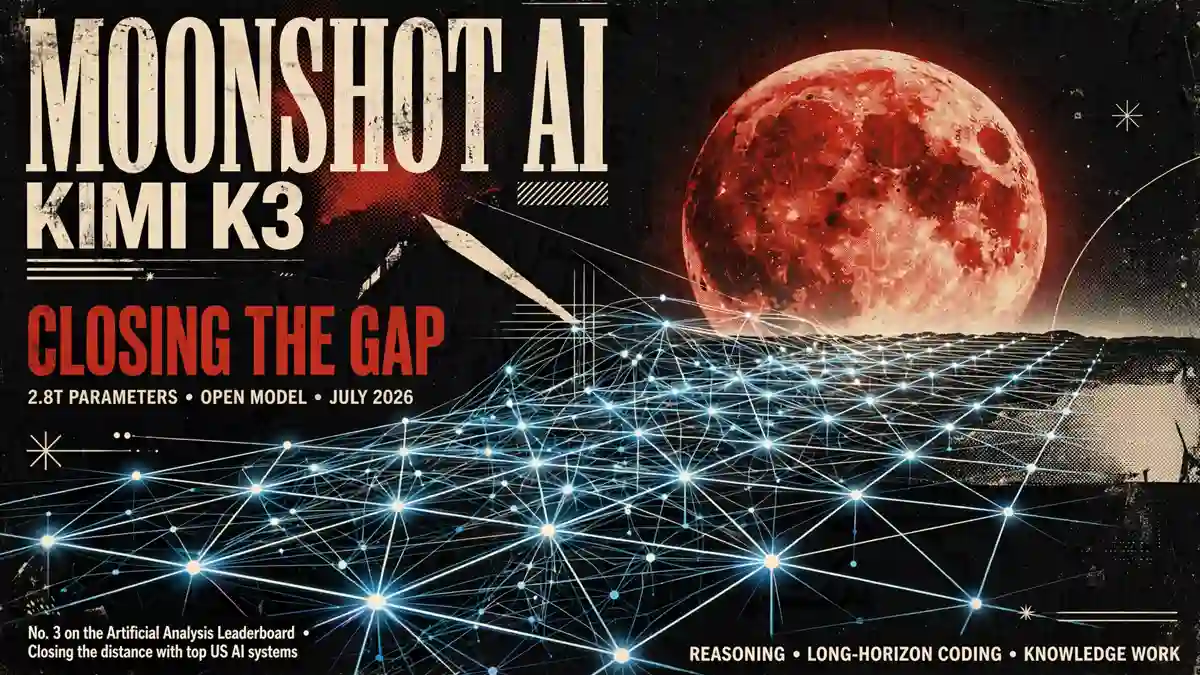
The timing tracks a broader shift already covered on this site. Chinese open-weight models, including Moonshot's Kimi K2 and K3, have closed much of the performance gap with leading American systems this year, and Nvidia's own developer platform already showcases Kimi K2, a 1-trillion-parameter model in its own right, running optimized on Nvidia's Blackwell hardware. Reuters' reporting also tied the Nemotron 4 push to a spate of recently disclosed AI agent security incidents, noting that open models "do not have curbs on cybersecurity use" the way closed, API-gated models can more easily enforce.
Nvidia is also one of the few major US companies still investing heavily in open releases at scale, alongside signing an open letter with Microsoft and other tech companies specifically backing open-weight models, reportedly to keep frontier AI innovation from "drifting overseas" toward the Chinese labs currently leading the open-weight leaderboard.
Nvidia Nemotron 4: FAQ
Nemotron 4 is a new family of AI models Nvidia is developing, reported by The Information on August 11, 2026, and confirmed by Reuters, aimed at competing with the world's leading open-weight models. The largest version is expected to have at least 1 trillion parameters, roughly double the size of Nvidia's current largest model.
Nvidia has not set a release date, and training was reportedly still ongoing as of the report. Employees working on the project told The Information it could be ready as early as late fall 2026, though Nvidia has not confirmed a specific timeline.
Nvidia VP of generative AI Kari Briski framed it around accessibility, saying every company and country needs dependable, accessible frontier open models. Analysts have also pointed to a more direct business logic: broader adoption of open-weight AI models, including Nvidia's own, tends to expand demand for the GPUs Nvidia sells, since more companies running more AI workloads generally means more chip purchases across the board.
In principle, yes. Nvidia has invested billions of dollars in OpenAI and other AI labs that are themselves building competing models, so a free, high-performing open model from Nvidia could reduce demand for API access to some of those labs' proprietary systems. Analysts have suggested Nvidia appears comfortable with that overlap because a larger, more diverse pool of AI users, including ones drawn in by free open models, ultimately still buys more of its chips.
Coverage of the report has used both terms somewhat interchangeably, though prior Nemotron releases from Nvidia have leaned toward genuine openness by industry standards, often including training data details alongside model weights. Whether Nemotron 4 meets the stricter, formal definition of open-source AI, requiring published training code and data, will depend on exactly what Nvidia discloses at release.
On the same day, Nvidia separately unveiled Nemotron 3.5 Lightning, a smaller model built for tasks like code review, tool use, and security alert monitoring, and released NeMo Switchyard, an open-source model-routing library designed to automatically direct different AI tasks to whichever model handles them best.

Jans Bock-Schroeder
Publisher & Founder of AI Angst
Coming from the world of art, photography, and the luxury market, Jans launched AI Angst in 2025 to explore the cultural, ethical, and psychological impacts of artificial intelligence. His work bridges creative vision with critical technology analysis, offering clarity in an era of rapid technological change.
Sources and Citations
This article is based on the following sources, published August 11-12, 2026:
-
Reuters (via BNN Bloomberg) — "Nvidia building 1-trillion-parameter Nemotron 4 to rival open AI models" (August 11, 2026)
Primary source for the confirmed reporting, Kari Briski's statement, and competitive context.
https://www.bnnbloomberg.ca/business/company-news/2026/08/11/nvidia-building-1-trillion-parameter-nemotron-4-to-rival-open-ai-models/ -
TipRanks — "Nvidia (NVDA) Stock Is Flat Despite 1 Trillion Parameter AI Model Aimed at Driving GPU Demand" (August 11, 2026)
Source for the market/business-strategy analysis and the 570-author research paper detail.
https://www.tipranks.com/news/nvidia-nvda-stock-flat-despite-1-trillion-parameter-ai-model-aimed-at-driving-gpu-demand -
Business Standard (Reuters) — "Nvidia building 1-trillion-parameter Nemotron 4 to rival leading AI models" (August 12, 2026)
Source confirming Nvidia's official response and additional detail on the AI safety coalition.
https://www.business-standard.com/technology/tech-news/nvidia-building-1-trillion-parameter-nemotron-4-to-rival-leading-ai-models-126081200516_1.html -
Sammy Fans — "NVIDIA Nemotron 4 could bring 1 trillion-parameter open AI model" (August 11, 2026)
Source for Kari Briski's full quote on accessibility and frontier open models.
https://www.sammyfans.com/2026/08/11/nvidia-nemotron-4-1-trillion-parameter/
Published: August 12, 2026. Sources verified at time of publication. All external links open in a new tab. This story is based on reporting from The Information, cited via Reuters and other outlets; Nvidia has acknowledged working on Nemotron 4 in general terms but had not independently confirmed all specific details as of this writing. This is not financial advice.