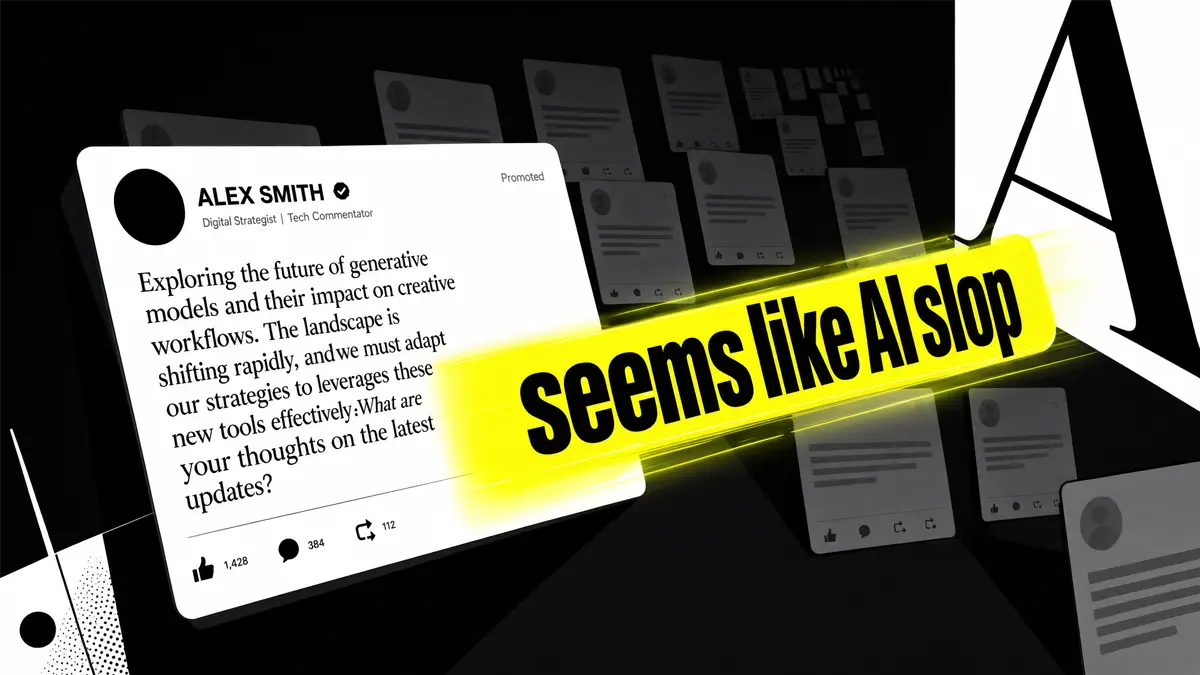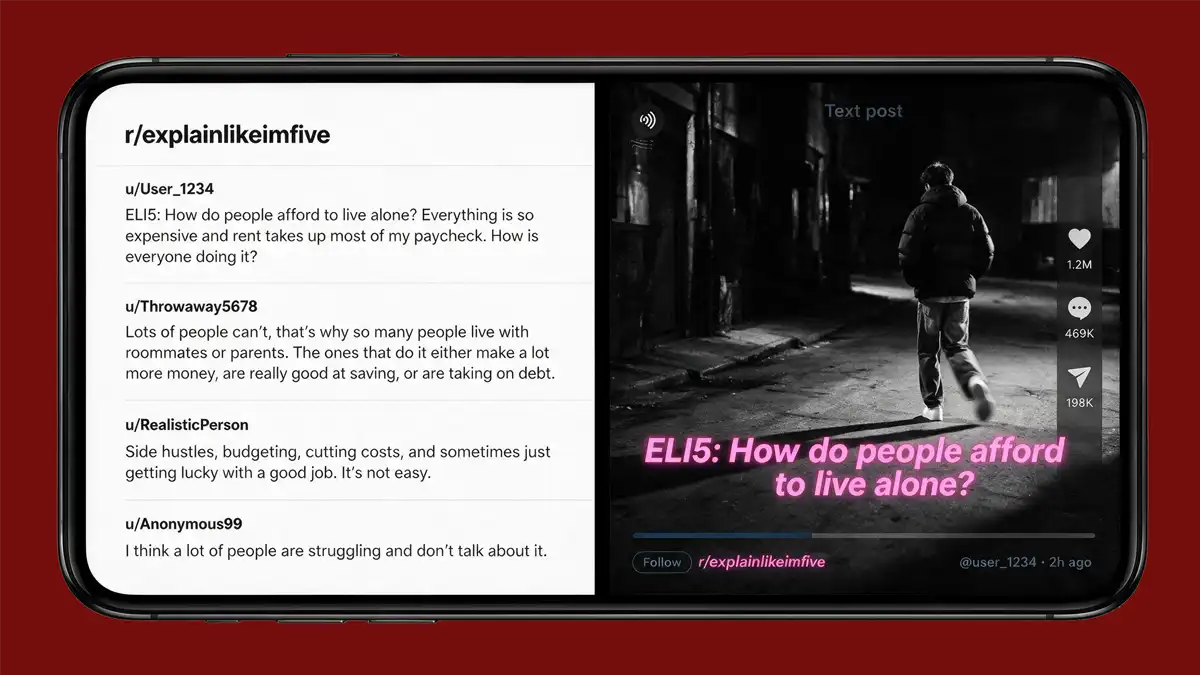

While AI slop floods the internet like crazy, with low-effort visual noise, history suggests that as creators are able to learn to subvert and master the medium, today's digital junk culture could eventually evolve into a recognized art form.
From 18th-Century Mud to 21st-Century Media: The Evolution of "Slop"
In the 1700s, if you said "slop," you meant mud. Wet, soft, unpleasant mud. By the 1800s, it had drifted toward kitchen scraps, the unappetizing leftovers fed to pigs.
In 2025, dictionaries around the world looked at that three-century-old word for muck, and decided it was the single best term for describing the internet.
The Word That Swept the Awards
This wasn't one dictionary making an eccentric choice. It was a genuine consensus, reached independently by multiple major dictionaries in the same year.
Merriam-Webster named "slop" its 2025 Word of the Year, defining it as "digital content of low quality that is produced usually in quantity by means of artificial intelligence"
Macquarie Dictionary, the standard reference for Australian English, separately named "AI slop" its own Word of the Year, defining it as "low-quality content created by generative AI, often containing errors, and not requested by the user"
"AI slop" also won Macquarie's public vote, meaning ordinary readers picked it too, not just the dictionary's expert committee
Collins Dictionary chose a related AI-era term, "vibe coding," as its own word of 2025
"Slop" beat out competitors including "gerrymander," "touch grass," "performative," and "tariff" for Merriam-Webster's top spot
Merriam-Webster's own writeup captured the tone shift the word represented: "Like slime, sludge, and muck, slop has the wet sound of something you don't want to touch. Slop oozes into everything." The dictionary added that the word carries "a tone that's less fearful, more mocking" of AI than earlier anxious coinages.
How a Word for Mud Got Here
The etymology is a genuinely satisfying arc. Merriam-Webster traces "slop" back to the 1700s, when it simply meant soft mud. By the 1800s, it had picked up a secondary meaning closer to food waste or scraps, the unwanted leftovers typically fed to livestock, and from there drifted into a general synonym for worthless, unappetizing junk.
That "worthless refuse" sense is exactly what made the word available for repurposing once generative AI started flooding feeds with mass-produced, low-effort content. It didn't need a new word invented from scratch; English already had one sitting around for exactly this kind of low-grade, unwanted abundance.
| Dictionary | 2025 Word of the Year |
|---|---|
| Merriam-Webster | "Slop" |
| Macquarie Dictionary | "AI slop" (also won public vote) |
| Collins Dictionary | "Vibe coding" |
| Oxford University Press | "Rage bait" |
| Cambridge Dictionary | "Parasocial" |
| Dictionary.com | "6-7" (unrelated viral slang term) |
The Unofficial Mascot: Shrimp Jesus
Before the word had a formal dictionary definition, it had a face, or at least, an extremely strange one. "Shrimp Jesus," a genre of surreal AI-generated images blending Christ imagery with, specifically, shrimp, spread across Facebook in 2024 as spam pages discovered that bizarre, eye-catching AI images reliably farmed likes, comments, and shares from confused or amused users.
The pattern behind it became a template: build an audience cheaply with uncanny AI content, then pivot the page toward ads, scams, or engagement-bait once the follower count is high enough. Euronews described the broader 2025 AI slop moment as running from "'Shrimp-Jesus' to Mark Zuckerberg wood carvings and even Donald Trump's crass content spewing," a genre distinct enough by then to be instantly recognizable across completely unrelated subject matter.
What Actually Counts as "Slop," and What Doesn't
The word isn't a blanket indictment of AI-generated content in general, and both dictionary definitions are careful about that distinction. The defining features are:
Low quality, often riddled with visible errors, inconsistencies, or nonsensical details
Mass production, generated in bulk rather than as a single considered piece of work
Unrequested, appearing in a feed, search result, or inbox the person never asked for
A single, carefully reviewed piece of writing or art that happens to involve AI tools isn't what people generally mean by the term. Merriam-Webster's president, Greg Barlow, noted the word's reach has extended well past social media images and video, into cybersecurity reports, legal briefings, and even the college essay, essentially any domain where volume and speed have started to substitute for care.
AI Slop: FAQ
Macquarie Dictionary defines it as "low-quality content created by generative AI, often containing errors, and not requested by the user." Merriam-Webster's related word of the year, "slop," is defined more broadly as "digital content of low quality that is produced usually in quantity by means of artificial intelligence." Both definitions emphasize low quality and mass, often unwanted, production, rather than AI use itself being the problem.
According to Merriam-Webster, the word dates to the 1700s, when it meant "soft mud," before evolving in the 1800s toward a meaning closer to food waste or scraps typically fed to animals, and eventually to a general synonym for worthless or unappetizing material. Its 2025 meaning, specifically about mass-produced low-quality AI content, is a recent extension of that older "refuse" sense.
Merriam-Webster named "slop" its 2025 Word of the Year. Macquarie Dictionary, the standard reference for Australian English, separately named "AI slop" its own Word of the Year, which also won the dictionary's public vote. The trend extended further: Collins Dictionary chose "vibe coding" as its 2025 word, another AI-era coinage, while Oxford picked "rage bait" and Cambridge Dictionary picked "parasocial," both loosely connected to the same broader anxiety about low-quality, algorithm-driven online content.
Shrimp Jesus refers to a genre of bizarre, uncanny AI-generated images, most notably depicting a Jesus-shrimp hybrid figure, that spread widely on Facebook in 2024 as a way for spam pages to farm engagement and followers before pivoting to scams or ads. It's frequently cited as one of the earliest, most visible mainstream examples of the phenomenon that came to be called AI slop.
No. The defining features are low quality, mass production, and typically being unrequested or unwanted by the audience encountering it, not AI involvement on its own. A carefully edited piece of writing or art that happens to use AI tools isn't generally what people mean by the term; a flood of generic, error-riddled, or nonsensical AI-generated posts, images, or videos produced purely to farm engagement or ad revenue is the more typical target.
Merriam-Webster's president told the Associated Press that spikes in lookups reflected growing public awareness of fake or shoddy AI content, alongside a desire for things that feel real and genuine. Dictionary editors across multiple companies pointed to the same underlying trend: AI-generated material had become so common across social media, search results, and even scientific and legal documents that ordinary people needed a shared word to describe and mock it.

Jans Bock-Schroeder
Publisher & Founder of AI Angst
Coming from the world of art, photography, and the luxury market, Jans launched AI Angst in 2025 to explore the cultural, ethical, and psychological impacts of artificial intelligence. His work bridges creative vision with critical technology analysis, offering clarity in an era of rapid technological change.
Sources and Citations
This explainer draws on the following sources, published November-December 2025:
-
TechCrunch — "Merriam-Webster names 'slop' the word of the year" (December 15, 2025)
Primary source for Merriam-Webster's definition, etymology, and Greg Barlow's quotes.
https://techcrunch.com/2025/12/15/merriam-webster-names-slop-the-word-of-the-year/ -
Euronews — "'AI slop': Macquarie Dictionary's Word of the Year is a sad reflection of modern anxieties" (November 26, 2025)
Source for Macquarie's definition, the public-vote detail, and the Shrimp Jesus reference.
https://www.euronews.com/2025/11/26/ai-slop-macquarie-dictionarys-word-of-the-year-is-a-sad-reflection-of-modern-anxieties -
PBS NewsHour (Associated Press) — "Merriam-Webster's word of the year for 2025 is AI 'slop'" (December 15, 2025)
Source for the competing shortlisted words and additional Barlow commentary.
https://www.pbs.org/newshour/nation/merriam-websters-word-of-the-year-for-2025-is-ais-slop -
CBC News — "AI haters, this one's for you: Merriam-Webster's 2025 word of the year is 'slop'" (December 15, 2025)
Source confirming the other 2025 dictionary picks, including Cambridge's "parasocial" and Oxford's "rage bait."
https://www.cbc.ca/news/entertainment/slop-word-of-the-year-9.7015916
Published: August 26, 2026. Sources verified at time of publication. All external links open in a new tab.