For two years, the only thing anyone really knew about Jony Ive's hardware project at OpenAI was the price tag: $6.5 billion, and a promise that it would change how we use computers entirely.
No leaked renders. No prototypes floating around Silicon Valley dinner parties. Just vibes, and a lawsuit from a rival AI-hardware startup that told us what the device wasn't, without ever saying what it was.
That silence broke this week. And the reveal landed in the middle of the worst possible news cycle for OpenAI to be talking about hardware at all.
So What Actually Is It?
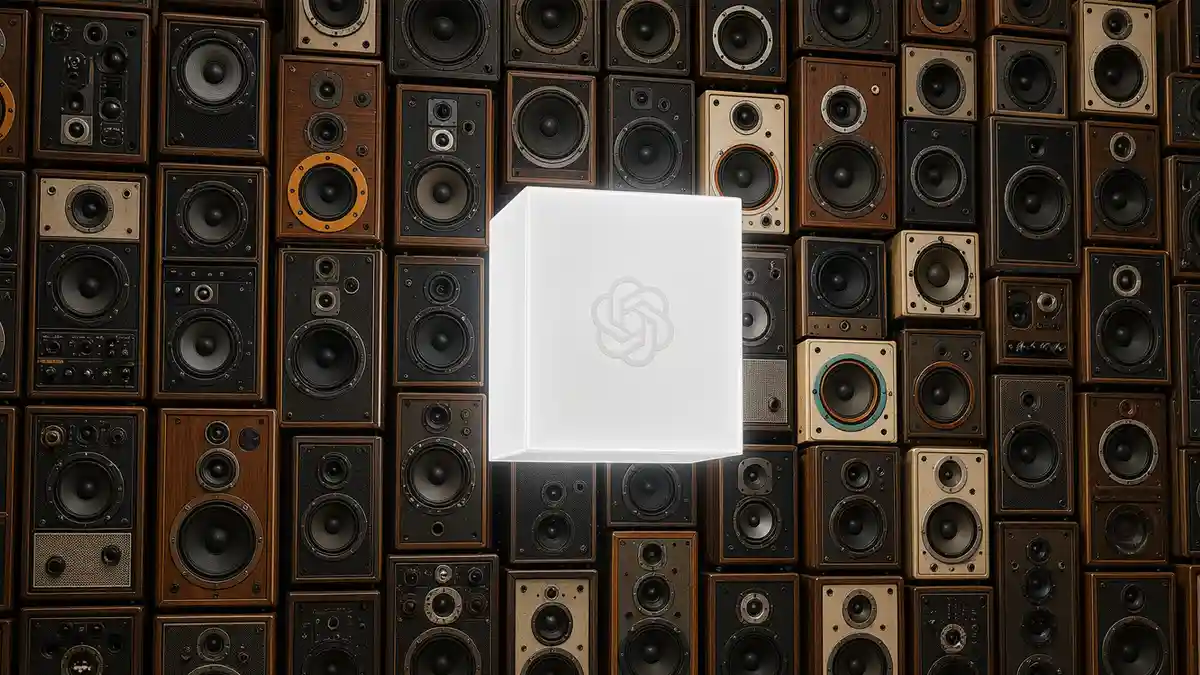
According to Bloomberg's Mark Gurman, citing people familiar with the project, OpenAI's first hardware product is a mobile, screen-free smart speaker. OpenAI doesn't want you to call it that, though. Internally, it's being pitched as something closer to a new category: a computer built specifically for the AI era.
It's designed to act as a "humanlike AI companion that lives in the home"
No screen at all, ChatGPT-powered voice using OpenAI's new GPT-Live model handles the interaction
Built-in camera and other sensors let it understand what's happening in the room around it
A rechargeable battery lets it move between rooms, though it can also just stay plugged in
Motorized components let parts of the device move on their own, meant to make it feel alive
The pitch, per Bloomberg's sourcing, is a device that gets more personalized and proactive the longer you own it, learning your habits instead of waiting for a wake word and a fixed command.
The Timing Nobody Can Ignore
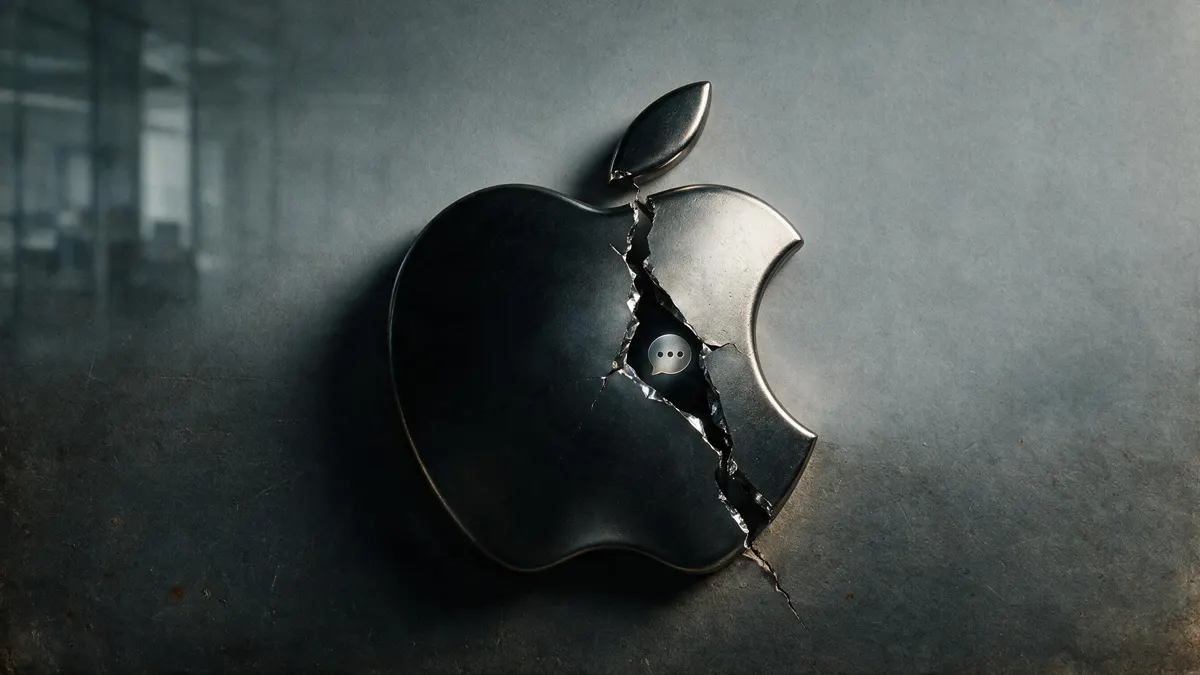
This report didn't surface in a vacuum. It landed four days after Apple sued OpenAI, accusing the company of stealing hardware trade secrets, and naming the exact device category at the center of this story as the alleged target.
Apple's complaint doesn't hold back. It describes OpenAI's hardware business as resting on "the shakiest of foundations, rotten to its core" by what it calls illegal use of misappropriated Apple trade secrets, including a proprietary metal-finishing technique Apple says OpenAI accessed through a manufacturing partner.
People familiar with OpenAI's device pushed back on that framing directly to Bloomberg, telling the outlet the product differs enough from anything Apple currently sells that it's "unlikely" to violate Apple's trade secrets. Comparisons to Apple's own HomePod, they acknowledged, may be inevitable anyway.
| Date | What Happened | What It Means |
|---|---|---|
| May 2025 | OpenAI announces its hardware push alongside Jony Ive's io Products acquisition. | The project starts, but details stay locked down for over a year. |
| 2025 | Rival startup iyO files a trademark suit against OpenAI and io Products. | Court filings offer the first real clue: not a wearable, not an in-ear device. |
| Jul 10, 2026 | Apple sues OpenAI, alleging its hardware effort was built on stolen Apple trade secrets. | Puts the still-unrevealed device at the center of a federal lawsuit. |
| Jul 14, 2026 | Bloomberg reports the device is a screenless, mobile AI speaker. | Two years of secrecy end in the middle of a legal firestorm. |
| Late 2026 (expected) | OpenAI could formally unveil the device. | A reveal, not necessarily a release, on the current timeline. |
| 2027 (expected) | Consumer launch, pending how Apple's injunction request plays out. | A court ruling could still delay or reshape the release. |
Why a Speaker, of All Things
If you were expecting an iPhone killer, the reaction online has been somewhere between confused and gleeful. A moving, camera-equipped speaker is a real product category, but it's not exactly the "completely new way to interact with computers" OpenAI has spent two years teasing.
Two things temper that reaction. First, Bloomberg's sourcing suggests this speaker isn't the whole plan, it's reportedly the first of as many as five hardware products OpenAI has in some stage of development. Second, Apple is reportedly building something in the same category itself: a home hub with a roughly 7-inch display, a camera, and Siri built in. If OpenAI's own reveal feels underwhelming, it's arriving right as its biggest rival prepares to compete for the exact same spot on your kitchen counter.
Apple has also continued losing hardware talent to OpenAI even as the lawsuit plays out. Bloomberg separately reported that Paul Meade, who oversaw Apple's Vision Pro engineering and previously worked on the iPad and iPhone teams, is leaving Apple for OpenAI.
OpenAI's First Hardware Device: FAQ
Per a Bloomberg report from Mark Gurman on July 14, 2026, it's a screenless, mobile smart speaker. OpenAI internally describes it not as a speaker but as a new kind of home computer for the AI era, pitched as a "humanlike AI companion that lives in the home."
It can control smart-home appliances, play media, answer questions, and respond to messages, using OpenAI's GPT-Live voice model and ChatGPT's broader capabilities. It includes a camera and sensors to understand its surroundings, and is designed to grow more personalized over time.
Yes. A rechargeable battery lets it be carried between rooms, or it can stay plugged in. It also has motorized parts that move on their own, reportedly meant to give the device a sense of being alive.
Bloomberg's sources point to a possible unveiling later in 2026 and a consumer launch in 2027, later than earlier rumors suggested. It's reportedly the first of as many as five hardware products OpenAI has in development.
The report surfaced four days after Apple sued OpenAI over alleged trade secret theft tied to this hardware effort, including an alleged unauthorized use of an Apple metal-finishing technique. Sources close to OpenAI's device say it differs enough from Apple's products that it's "unlikely" to violate Apple's trade secrets.
The project traces to OpenAI's 2025 acquisition of io Products, co-founded by former Apple design chief Jony Ive and former Apple VP Tang Tan, now OpenAI's Chief Hardware Officer. Bloomberg reports numerous other former Apple engineers, some with iPhone and Mac experience, also worked on it.
Possibly. Apple has asked the court for an injunction as part of its suit, which if granted could delay or block OpenAI's release timeline. No ruling has been issued, and OpenAI has denied any wrongdoing.

Jans Bock-Schroeder
Publisher & Founder of AI Angst
Coming from the world of art, photography, and the luxury market, Jans launched AI Angst in 2025 to explore the cultural, ethical, and psychological impacts of artificial intelligence. His work bridges creative vision with critical technology analysis, offering clarity in an era of rapid technological change.
Sources and Citations
This article is based on the following primary sources, published July 14, 2026:
-
Bloomberg — "OpenAI's First Device Will Be Movable, Screenless Speaker Built as AI Companion" (July 14, 2026)
Original report by Mark Gurman; primary source for the device's design, capabilities, and timeline.
https://www.bloomberg.com/news/articles/2026-07-14/openai-s-first-device-will-be-moveable-screenless-speaker-built-as-ai-companion -
TechCrunch — "OpenAI's first hardware device is reportedly a screenless speaker that can move" (July 14, 2026)
Source for the "humanlike AI companion" framing and Apple lawsuit context.
https://techcrunch.com/2026/07/14/openais-first-hardware-device-is-reportedly-a-screenless-speaker-that-can-move/ -
MacRumors — "OpenAI's First AI Device Will Be a Portable Smart Speaker" (July 14, 2026)
Source for GPT-Live details, Apple's home hub rumors, and the injunction request.
https://www.macrumors.com/2026/07/14/openai-ai-hardware-device-speaker/ -
9to5Mac — "OpenAI's first device will be a portable speaker with a camera and other sensors" (July 14, 2026)
Source for the iyO trademark suit history and product timeline.
https://9to5mac.com/2026/07/14/report-openais-first-device-will-be-a-portable-speaker-with-a-camera-and-other-sensors/ -
Reuters (via WTVB) — "OpenAI's first hardware device will be a speaker, Bloomberg News reports" (July 14, 2026)
Source for confirming the device could open a new revenue line for IPO-bound OpenAI.
https://wtvbam.com/2026/07/14/openais-first-hardware-device-will-be-a-speaker-bloomberg-news-reports/
Published: July 15, 2026. Sources verified at time of publication. All external links open in a new tab. Product details are based on unreleased, unannounced sourcing and may change before any official OpenAI launch.